
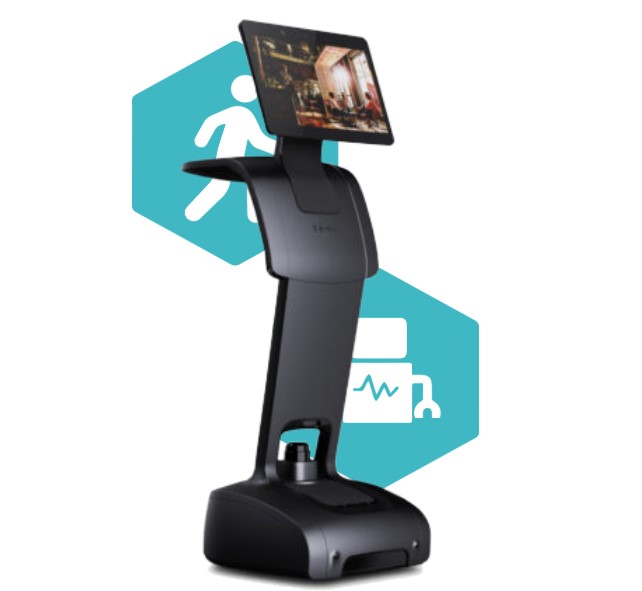
The development and experimentation proposed in “ECOSYSTEM OF AMBIENT INTELLIGENCE FOR SUPPORTING LONG-TERM CARE AT HOME THROUGH THE USE OF SOCIAL ROBOTS ()” is based on a methodology of open innovation and technological co-creation with users to generate solutions that foster personal autonomy. Recent advancements in healthcare have led to an unprecedented increase in the number of older adults. Consequently, in recent years, interest in assistive technologies has substantially grown, aimed at helping these individuals remain active and live independently, either in their own homes or integrated residential units within care centers. This project seeks to advance the care and entertainment of older adults through a precise combination of social robots, robotic systems for navigation and manipulation, and ambient intelligence systems. EIAROB will be deployed in real environments, such as residences and day centers, with significant experimentation efforts in real operational environments. To achieve this, the project will include researchers from the University of Valladolid and social entities that work closely with older adults, as well as technology companies that will support the development and scalability of the proposed solutions. The project promotes the creation of a complete ecosystem that integrates social robots and ambient intelligence to offer advanced services and improve the quality of life of older adults, maintaining its leadership in providing innovative services.
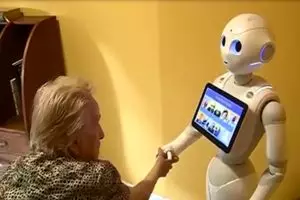
Recent advances in health care have resulted in an unprecedented increase in the number of elderly people. Consequently, there is a growing interest in assistive technologies that help these people remain active and live independently, in their own home or in coexistence units integrated in residential centres. Within this context, ROSOGAR aims to explore new solutions based on social robots and other robotic and monitoring systems to support the provision of social services, with a special emphasis on long- term care and domestic environments. The project involves the development, integration and validation of robotic platforms and intelligent environments in real scenarios, in collaboration with social service providers and research centres. Its goal is to improve the autonomy and well-being of older people, as well as to support professionals and caregivers through technology. (Developed at CARTIF)

AIROSO is a project focused on the use of robotics and intelligent systems for the care of dependent people, particularly in socio-health environments such as nursing homes and centres for the elderly. The project combines social robots, service robots and ambient intelligence to offer support in daily activities, cognitive stimulation and monitoring of users’ well-being. It has been recognised by the DomusVi Foundation for its contribution to the socio-health sector, highlighting its potential impact on the quality of life of dependent people and the work of professionals. (Developed at CARTIF)
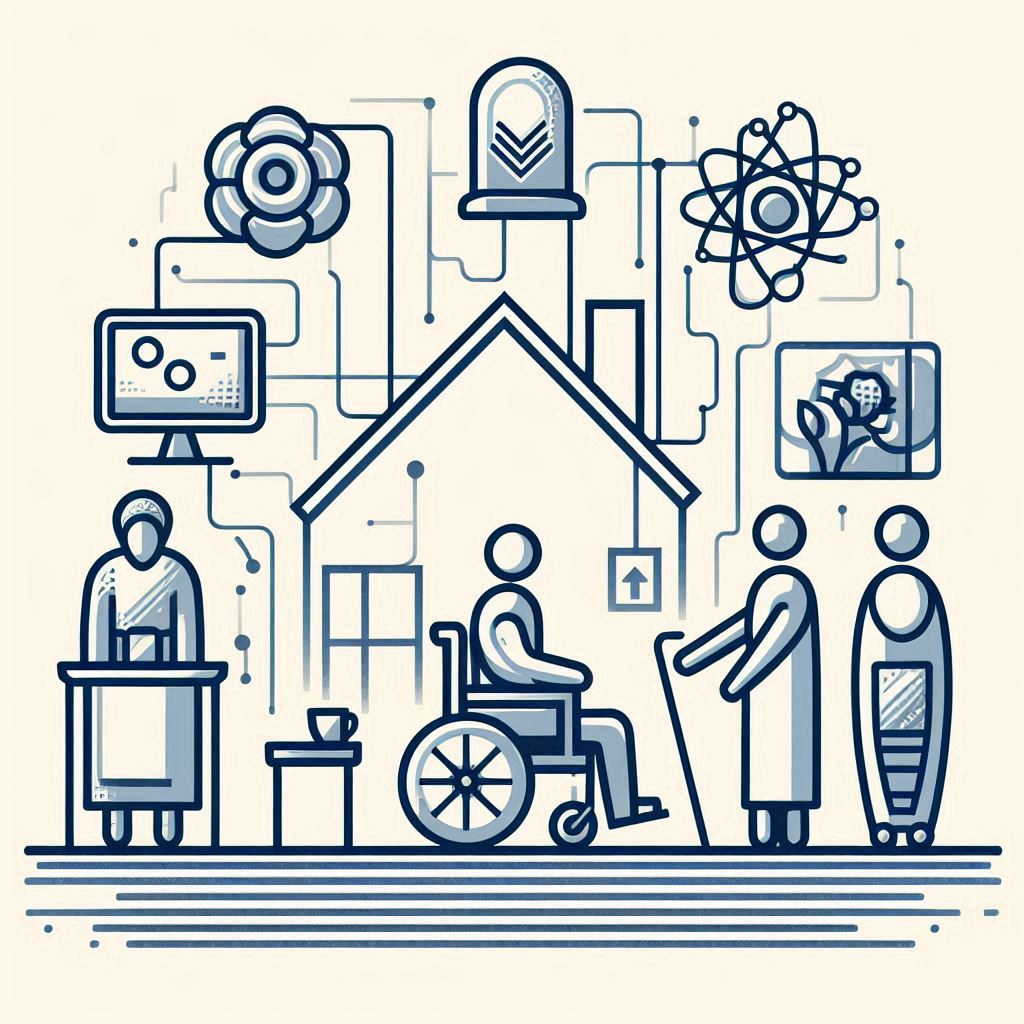
ROASIS focuses on the design and deployment of robotic and sensing systems that support care for elderly and dependent people in their own homes or residential environments. The project integrates mobile platforms, social robots and monitoring technologies to detect risky situations, remind users of tasks and therapies and provide cognitive and social stimulation. It aims to create safer, more supportive living environments that promote autonomy and delay the need for institutionalization. (Developed at CARTIF)

The 5R Project, funded by Spain’s Ministry of Economy and Competitiveness, focuses on developing technologies and methodologies that support the transformation of production systems towards smarter, more flexible and sustainable manufacturing. The project promotes the integration of automation, robotics, data analytics and cyber-physical systems in industry. Its main goals include improving the efficiency and adaptability of production lines, facilitating human-robot collaboration and introducing new approaches to maintenance and quality control. The work includes demonstration pilots in real industrial environments to validate the developed solutions. (Developed at CARTIF)

AGROVIS develops advanced computer vision and artificial intelligence systems for quality control and process monitoring in the agri-food sector. The project addresses tasks such as visual inspection, defect detection, classification and traceability of products, with the aim of increasing efficiency and ensuring food safety. The solutions are designed to be integrated into production lines and work in real time, supporting both large industries and small and medium-sized enterprises. (Developed at CARTIF)

The RURITAGE project, funded by the European Union’s Horizon 2020 program, focuses on rural regeneration through cultural and natural heritage (CNH). It identifies 13 rural areas as Role Models, showcasing successful CNH-driven regeneration in six innovation areas: Pilgrimage, Resilience, Local Food, Landscape, Management, Migration, and Art & Festivals. These best practices are transferred to six Replicators, rural territories developing their own heritage-led strategies to enhance skills, knowledge, and capacity building. (Developed at CARTIF)

SRURAL aims to reduce the digital divide between urban and rural environments by deploying advanced ICT infrastructures and services in rural areas. The project focuses on smart territories, using sensor networks, data platforms and communication technologies to improve key sectors such as agriculture, environment, energy and tourism. It seeks to enhance the quality of life of rural populations, promote sustainable development and support local administrations in decision-making. (Developed at CARTIF)
We are part of the ITAP (Institute of Advanced Production Technologies) at the School of Industrial Engineering, University of Valladolid.
© 2025 ITAP Robotics & Computer Vision Group.
Site made with Jekyll
Copy and modify it for your own research group.